
Economic Center Warns of Worsening Humanitarian Crisis in Taiz Due to Road Closures
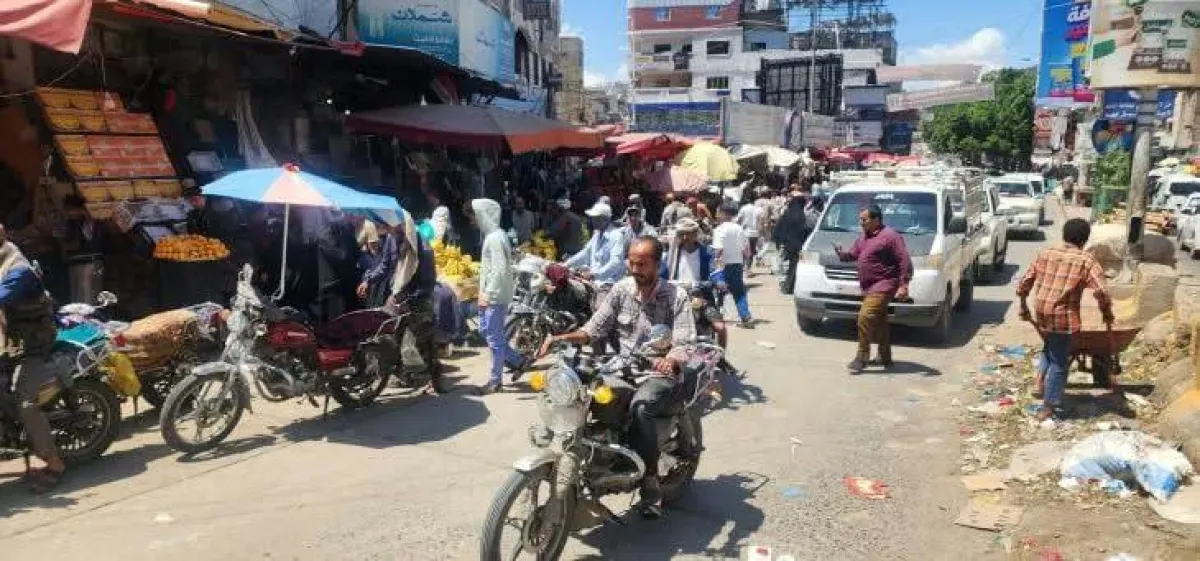
An economic research center has issued a stark warning regarding the escalating economic and humanitarian crisis in Taiz, attributing the deterioration to the persistent blockade and frequent closures of the city's sole supply route. The center emphasized that any perceived improvement in the availability of essential goods is temporary and does not signify a sustainable solution, citing concerns of renewed price hikes and a deepening crisis in food, water, and healthcare services.
The Economic Studies and Media Center, in its third briefing on the economic and humanitarian situation in Taiz covering October 10-21, 2026, noted that limited shipments of wheat and flour, coupled with existing merchant stocks, had contributed to a temporary increase in commodity supply. However, the recurring closure of the Al-Dhabab road poses a significant threat of stock depletion and a resurgence of high prices, as truck and civilian movement is severely hampered by the road being open for only limited hours before being shut again.
According to the briefing, the price of a 50-kilogram sack of white flour decreased from 60,000 Yemeni Rials on October 12 to approximately 50,000 Rials by October 17 in most monitored shops. This is a notable increase compared to the 38,000 Rials recorded before the recent military escalation. Similarly, the price of 20 liters of gasoline on the black market fell from 90,000 Rials to 60,000 Rials during the same period, though it remained roughly double its pre-escalation level.
In contrast, the domestic gas crisis persisted, with cylinder prices fluctuating between 25,000 and 40,000 Rials. The first gas tanker to reach the city since the beginning of the month sold out on the day of its arrival due to high demand and irregular supply. The center quoted the Director of the Taiz Chamber of Commerce and Industry, Abdulrahman Al-Qalia, who warned that the supply improvement is "very temporary." He explained that the repeated closure of the supply route every day or two compels traders to reduce imported quantities, postpone shipments, or abandon commercial activities altogether, often relocating to other areas.
The center highlighted that the consequences of the blockade extend beyond price increases and commodity shortages, eroding trader confidence and weakening economic activity. This is due to increased transportation costs, supply risks, and reduced shipments, which disproportionately burden low-income families, daily wage earners, and displaced individuals who have lost their livelihoods.
On the humanitarian front, the briefing indicated that aid has been unable to reach over 600,000 individuals in Taiz who rely on food assistance, including more than 200,000 women and children, as reported by the World Food Programme and its partners on October 14. The WFP warned of potential significant reductions in aid starting in November unless additional funding is secured.
Regarding displacement, data from the International Organization for Migration on October 13 reported 217,303 displaced individuals, equivalent to 36,216 families, since the escalation began. The UNHCR, however, estimated over 250,000 people displaced in Yemen between August 1 and October 17, with variations in monitoring scope and estimation methodologies between the two agencies.
In the water and health sectors, the center cautioned about the impact of fuel and supply shortages on essential services. It cited accusations by the local authorities against the Houthi group for preventing the entry of water tankers from the Al-Dhabab wells. The Health Office also warned of critical levels of medicine, medical solutions, and fuel, jeopardizing the lives of 1,110 patients with kidney failure and 192 patients in intensive care units.
The center called for urgent measures to ensure the flow of essential goods and services to the city. These include establishing fixed and announced transit hours via the Al-Dhabab road, securing passage for trucks, water tankers, patients, and citizens, providing necessary fuel for water pumps and hospitals, and ensuring the availability of medicines and medical solutions for the most vulnerable patients. It also stressed the need to offer guarantees and facilities to traders to mitigate supply risks and ensure the continuation of commercial activity, along with the regular publication of commodity stock data. The center warned that continued intermittent closures could lead to the depletion of supply, renewed price increases, and the erosion of the city's commercial and investment base.
The center anticipates continued disruption over the next two to four weeks, given the absence of clear indicators for a settlement that would guarantee the regular opening of roads or the establishment of safe humanitarian and trade corridors. It urged immediate action to avert further economic and humanitarian decline in Taiz.