
Taiz Faces Escalated Houthi Assault, Threatening Humanitarian Crisis
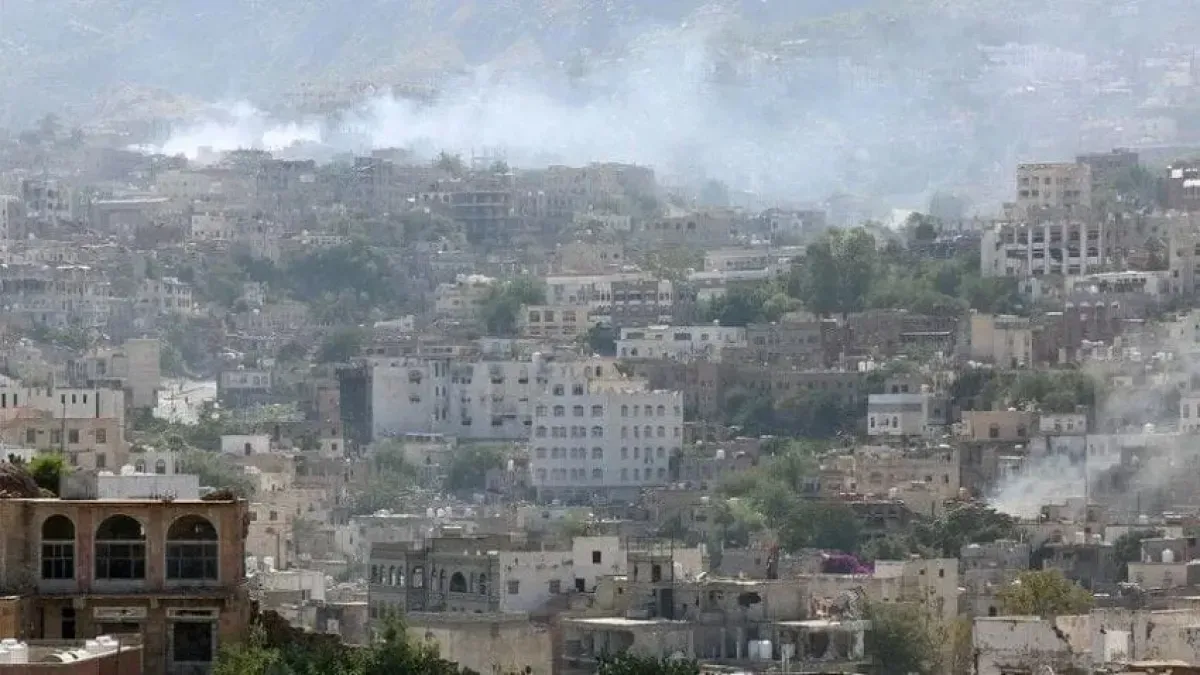
Taiz Governorate is experiencing its most intense military escalation in months, as government forces and popular resistance fighters engage in fierce battles to repel large-scale Houthi assaults and infiltrations. This rapid escalation coincides with systematic Houthi attacks targeting vital infrastructure, tightening the noose on millions of civilians, and revealing the group's intent to use siege and starvation as direct warfare tactics.
Recent reports from the Taiz Military Axis Information Center detail confrontations along the city's outskirts and the governorate. Government forces successfully thwarted infiltration attempts in the southern fronts of Al-Aqroush and Al-Shaqb, and the western fronts of the Old Airport and Jabal Han. These efforts resulted in significant Houthi casualties during what were described as suicidal infiltration attempts.
Coalition fighter jets conducted concentrated airstrikes on Houthi reinforcements and newly established positions in the Softil Hill area and the vicinity of Al-Sittin Street. These strikes destroyed military vehicles and set ablaze armored vehicles that had been used to shell residential areas. In response to battlefield setbacks, the Houthi militia launched widespread raids on civilian homes in the Al-Ma'afer district, abducting several individuals and taking them to prisons in Al-Saleh City, reportedly to pressure the forced recruitment of children from the province.
In a dangerous escalation met with widespread human rights condemnation, the Houthi militia detonated a vital water culvert on the strategic Haijat Al-Abd road in the Al-Turbah district. This road is the primary and sole remaining artery connecting the governorate to the temporary capital, Aden, and facilitates the flow of essential goods. Local and engineering sources confirmed that the explosion has brought commercial and relief transport trucks to a near standstill, threatening to completely isolate the city and double the cost of basic commodities, which civilians are already struggling to afford.
Data released by the Taiz Siege Affairs Office and the Yemeni Network for Rights and Freedoms has documented the extent of ongoing Houthi violations. The militia has fired over 369 artillery shells, rockets, and mortar rounds in recent weeks, targeting populated villages like Kahlan and eastern city neighborhoods. Human rights reports have documented 300 direct violations by the militia since late August, resulting in the deaths of 64 civilians and injuries to dozens more, including recent incidents where children and women were killed or wounded by artillery shelling and sniper fire near front lines.
Health and local authorities in Taiz have issued an urgent distress call, warning that the medical and humanitarian system is on the verge of total collapse. Al-Thawra General Hospital and other major hospitals face the imminent risk of complete shutdown of all vital departments, including kidney dialysis and infant incubators, due to a severe shortage of petroleum derivatives, resulting from the Houthis' detention of fuel tankers at entry points. The militia continues to prevent the pumping of drinking water from the Al-Dabab basin, forcing residents to rely on contaminated sources that have led to the spread of epidemics and intestinal diseases, alongside a sharp decline in food and flour reserves, which are nearing complete depletion.
International reports from organizations such as Human Rights Watch and Amnesty International affirm that the Houthi militia's actions in Taiz constitute war crimes and collective punishment, punishable under international humanitarian law. Despite Taiz being a focal point in all previous UN consultations and truce negotiations, the Houthis consistently evade their commitments, exploiting perceived international silence to continue strangling the city and using the suffering of three million civilians as political and military leverage without deterrence.