
Tehran Talks: Saudi-led bloc meets Iran amid Yemen crisis
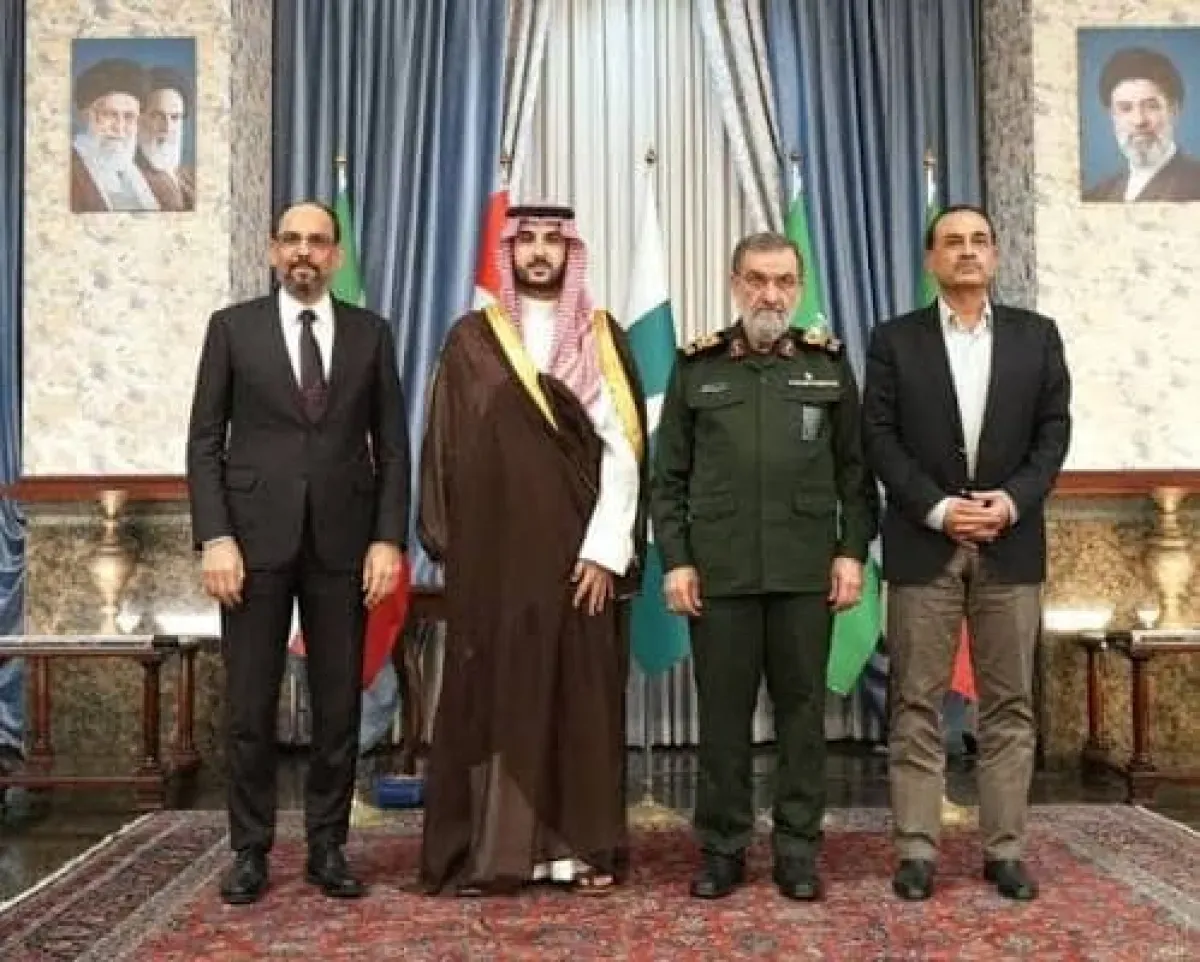
A high-level quadrilateral meeting in Tehran on October 26, 2026, involving leaders from the Mecca Pact defense alliance (Saudi Arabia, Turkey, and Pakistan) and Iranian leadership, has introduced a sensitive regional dimension to the Yemeni crisis. This security dialogue occurs as Houthi militia control approximately one-third of Yemen's territory and influence the lives of nearly two-thirds of its population, raising critical questions about the meeting's potential outcomes: whether it will lead to dismantling Tehran's proxy in Yemen or solidify the Houthi coup as a de facto reality.
The security initiative was facilitated through joint mediation efforts by Pakistan and Qatar. The meeting included prominent figures such as Saudi Defense Minister Prince Khalid bin Salman, Turkish Intelligence Chief İbrahim Kalın, and Pakistani Army Chief General Asim Munir, who met with Iranian President Masoud Pezeshkian and Supreme National Security Council Secretary Mohsen Rezai. According to Reuters, citing security officials, the agenda focused on de-escalating the accelerating tensions in the Red Sea and halting Houthi missile attacks targeting Saudi oil facilities and civilian airports, which resumed after the collapse of the 2022 truce.
At the conclusion of the meeting, Iran's Supreme National Security Council Secretary, Mohsen Rezai, announced a preliminary agreement emphasizing that regional security should stem from within the region, driven by its own nations, and remain free from foreign interference. This outcome has led to divergent analyses regarding its implications for Yemen.
One perspective, held by political observers and analysts, suggests the diplomatic engagement represents a Saudi strategy to encircle the Houthi militia by directly pressuring their primary financier and arms supplier. Potential positive repercussions for the Yemeni issue include the drying up of the militia's military arsenal, as intelligence reports indicate their reliance on Iranian Revolutionary Guard Corps-supplied ballistic missiles, drones, and real-time intelligence for attacks. Any agreement obligating Tehran to cease these supplies would significantly cripple Houthi offensive capabilities. Furthermore, the Mecca Pact, with its substantial military force and economic output, could serve as a robust deterrent. The potential for Egyptian parliamentary authorization of direct military support to Saudi Arabia could further bolster this deterrence. Lastly, a reduction in external support and the removal of "regional" justifications would compel the militia to confront domestic challenges and a depleted Yemeni populace, potentially exacerbating internal instability due to economic failures, as indicated by a recent UN report on rising internally displaced persons.
Conversely, some Yemeni political circles harbor legitimate concerns that the Tehran meetings could negatively impact aspirations for restoring the Yemeni state. These fears center on the potential for separating regional security files from the internal Yemeni conflict, thereby granting implicit legitimacy to the Houthi rule. A significant risk lies in the possibility of an regional non-aggression pact that secures international navigation in Bab el-Mandeb and the Strait of Hormuz, as well as Saudi borders, while leaving Yemen vulnerable to Houthi dominance. There are also concerns that Houthi strategic demands, reportedly being pressed through Tehran, such as lifting restrictions on Houthi-controlled ports and airports and securing payment of their fighters' salaries from Yemeni oil revenues, could effectively institutionalize and financially sustain the coup. Moreover, historical patterns suggest that the Houthis often exploit periods of regional diplomacy to regroup and re-establish their positions, as evidenced by recent territorial gains during the region's preoccupation with diplomatic overtures.
In a parallel development, security sources revealed a formal request from Riyadh for a Turkish defensive military presence on Saudi territory, intended to mirror a Qatari model and enhance deterrence against potential Houthi military miscalculations should diplomatic efforts falter. Ultimately, the Tehran quadrilateral talks have placed the Houthi coup within the framework of major strategic calculations. The outcome will likely either lead to joint pressure from the Mecca Pact compelling Tehran to curb the militia and integrate them into a political process that ends their military dominance, or result in partial agreements that offer the militia a new lifeline, prolonging the suffering of the Yemeni people under their rule.