
US Deploys Unprecedented Naval Force in Middle East, Fueling Iran Strategy Speculation
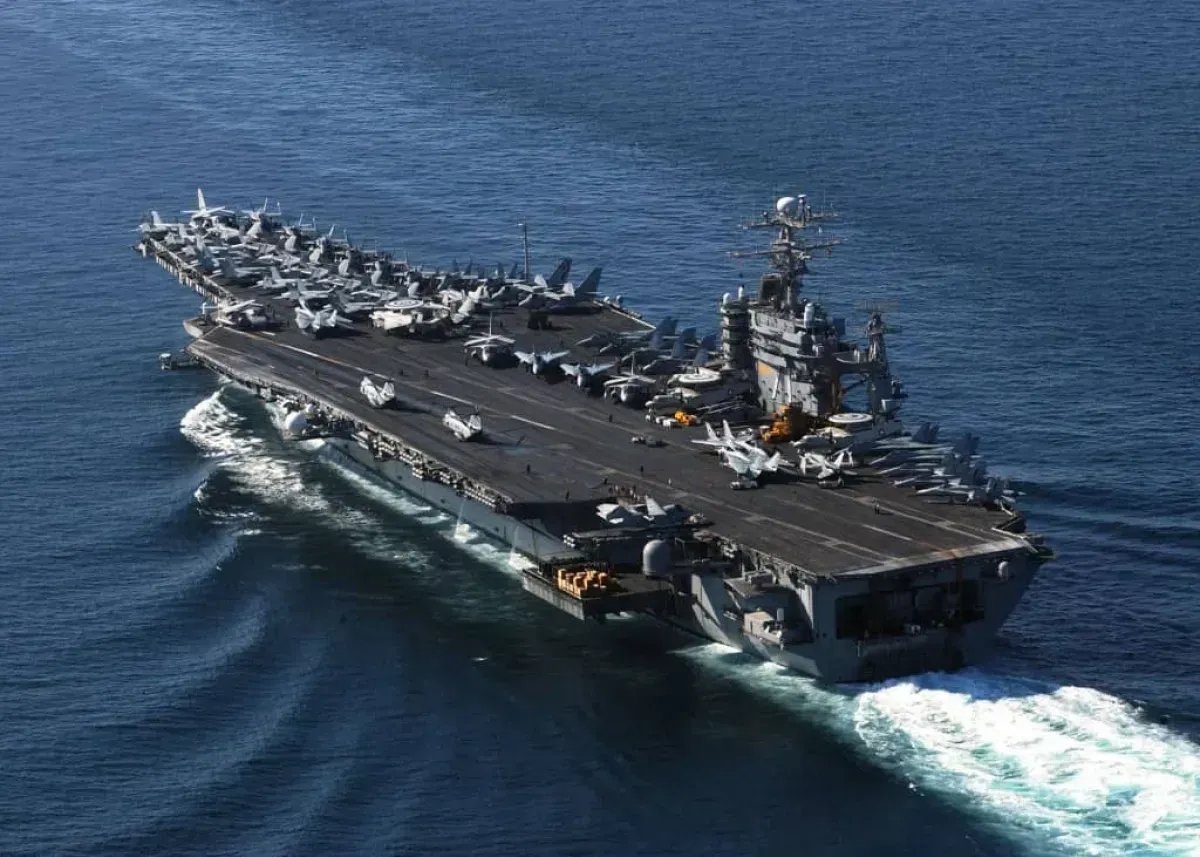
The Middle East has witnessed an unprecedented US naval buildup with the arrival of the aircraft carrier USS Theodore Roosevelt, joining the USS George H.W. Bush and USS George Washington. This deployment marks the largest concentration of American naval power in the region since the 2003 invasion of Iraq, with military assessments suggesting it carries firm warning messages to Iran and its regional proxies, particularly the Houthi movement.
The Roosevelt's strike group includes a guided-missile cruiser, destroyers, a nuclear submarine, and a Marine expeditionary unit, bringing the total number of US forces in the region to approximately 50,000 personnel. The three aircraft carriers collectively provide formidable firepower, comprising 144 fighter jets capable of conducting precision long-range strikes, which intelligence analysts view as a traditional indicator of preparation for large-scale military operations.
Press reports indicate that the US administration may link any escalation of military action to the absence of further provocations from Tehran or the Houthis, as Washington considers attacks targeting international shipping or regional allies as potential triggers for direct confrontation. In this context, options under consideration by Washington range from targeting Iran's nuclear facilities and missile infrastructure to striking Houthi weapons depots and drone facilities, alongside intensified naval blockades.
Concurrently, Israeli sources have confirmed Tel Aviv's readiness to conduct independent operations if necessary, despite reports suggesting American restraint influenced by pressure from regional allies. Observers believe this buildup could represent a strategic pressure tactic aimed at compelling Iran to return to negotiations for a new nuclear agreement and curb Houthi activities threatening maritime security in the Red Sea.
Despite the scale of the military mobilization, the absence of on-the-ground logistical indicators, such as large-scale evacuations or airspace closures, leaves questions about whether this deployment heralds an imminent military action or falls within the framework of a "maximum pressure" policy as a negotiation tool. Attention remains focused on future developments to determine the trajectory of this strike force.